Seventeen Global Banks Prepare to Pilot Swift’s Tokenised-Deposit Ledger
A familiar cross-border payment problem is getting a new answer: what happens when money is “fast” in the app, but still behaves like it keeps office hours underneath?
Jocelyn Davenport·updated July 13, 2026
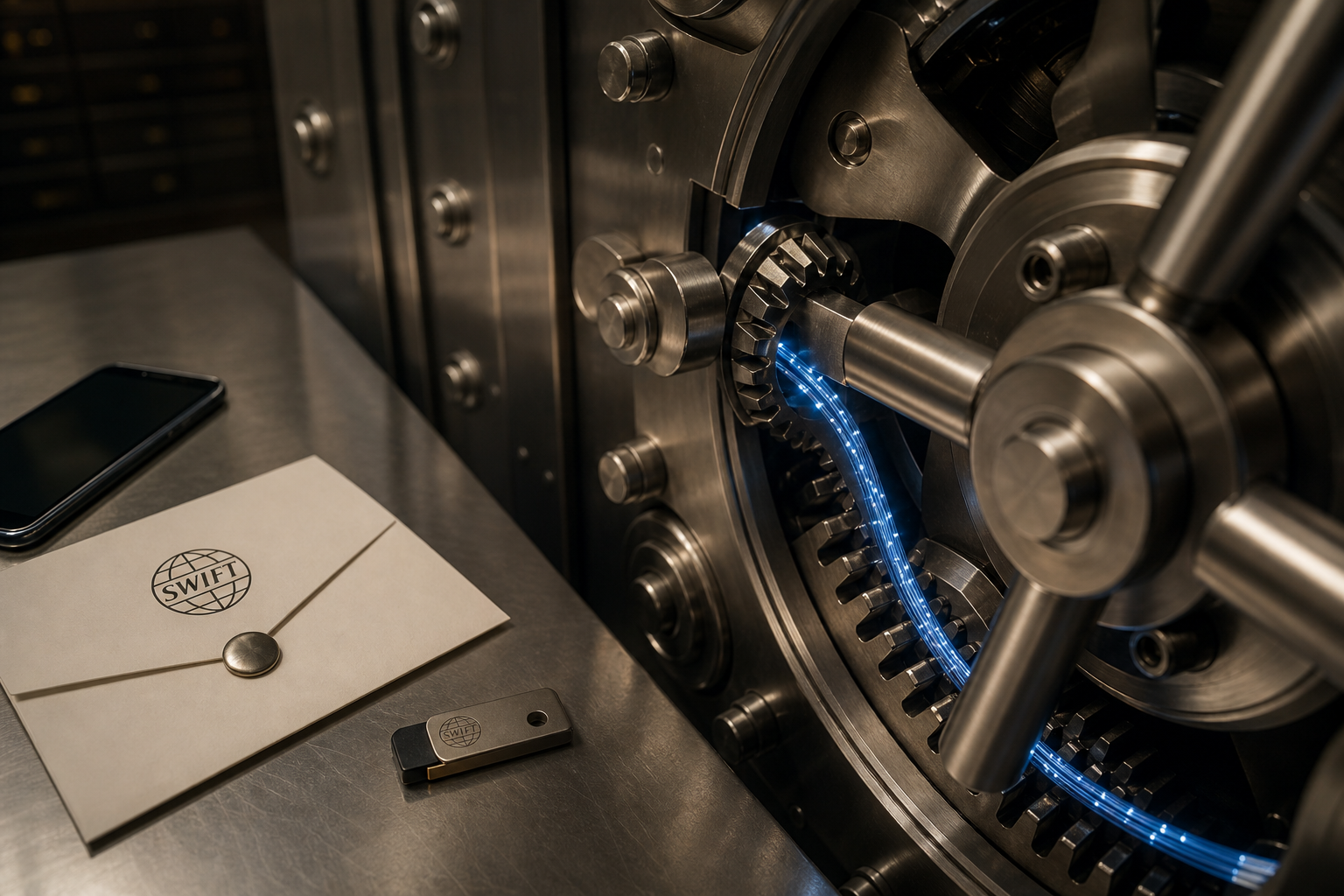
Swift is adding a 24/7 layer, not ripping out the pipes
According to Technology Org, Swift says its new ledger capability is ready for initial use after being unveiled last year. The pilot involves 17 banks across six continents and is positioned around round-the-clock cross-border payments using tokenised deposits.
That distinction matters. Tokenised deposits are described here as digital versions of commercial bank money that remain on each bank’s own ledger. In plain terms: this is not Swift trying to make banks look like a public crypto network. It is more like placing a new availability layer over existing bank infrastructure.
The design choice is classic institutional finance: move faster, but keep the familiar control points. Payments can move at any hour, while final settlement still uses the rails banks already rely on. Swift frames this as a way to keep compliance, credit, risk and control standards in place.
For users, that sounds boring — until you have tried to move money internationally on a Friday evening and discovered the hidden choice architecture of banking: cut-off times, correspondent chains, unclear status screens, and the strange silence between “sent” and “received.”
The behavioral promise: less waiting, less guessing
Swift says three-quarters of payments on its network already reach beneficiary banks within 10 minutes, often in seconds. The new ledger is meant to extend that experience toward always-on availability for regulated digital money.
This is where the pilot becomes relevant beyond wholesale banking. Neobanks and fintech apps have trained users to expect immediate feedback: a clear status, a notification, a visible balance change. Traditional cross-border banking often still asks users to tolerate uncertainty. That uncertainty is not just an operational issue; it increases cognitive load. People check balances repeatedly, contact support, delay purchases, or keep extra liquidity “just in case.”
Participating banks reportedly see the project as a route to better settlement speed, liquidity and cash-flow visibility while staying inside regulated banking infrastructure. That is a very bank-like promise, but it touches a very human problem: not knowing where your money is.
Swift’s chief business officer Thierry Chilosi said the ledger extends the “trust and stability of established finance” into digital money, while keeping resiliency, security and compliance. The marketing language is polished, as it always is. The test will be whether the customer journey actually changes — not whether the infrastructure deck looks modern.
What to watch before calling this a stablecoin answer
The timing is hard to ignore. Banks, payment firms and crypto companies are all testing faster ways to move value across borders. Stablecoin issuers already offer transfers outside banking hours, and Swift’s approach keeps value on bank-led rails while borrowing the always-on expectation those challengers helped normalize.
That does not make this a consumer product tomorrow. The source material points to an initial controlled go-live phase, with functionality expected to expand later. It also notes that industry watchers see critical mass among banks as key. That is the less glamorous, more important constraint. A payment network is useful only when enough counterparties agree to use it.
For fintech operators, the practical question is not “Is Swift doing blockchain now?” It is: will bank-issued digital money become easier to integrate into products that already compete on speed and clarity? For neobanks, treasury platforms and cross-border apps, a regulated 24/7 bank-money layer could reduce some back-end friction. But only if it shows up as predictable availability, transparent status, and fewer exceptions for the person or business waiting on funds.
That is the trust test. Consumers rarely care which ledger moved their money. They care whether the app told the truth, whether the payment arrived when promised, and whether the system still works when the weekend begins.