City Bank, Milk Vita, Agroshift ink deal to boost digital financing for dairy farmers
City Bank, one of Bangladesh's established private banks, has signed a three-way partnership with Milk Vita — the country's largest dairy cooperative — and the agritech platform Agroshift to widen digital financing for dairy farmers.
Jocelyn Davenport·updated June 24, 2026
The architecture of the deal
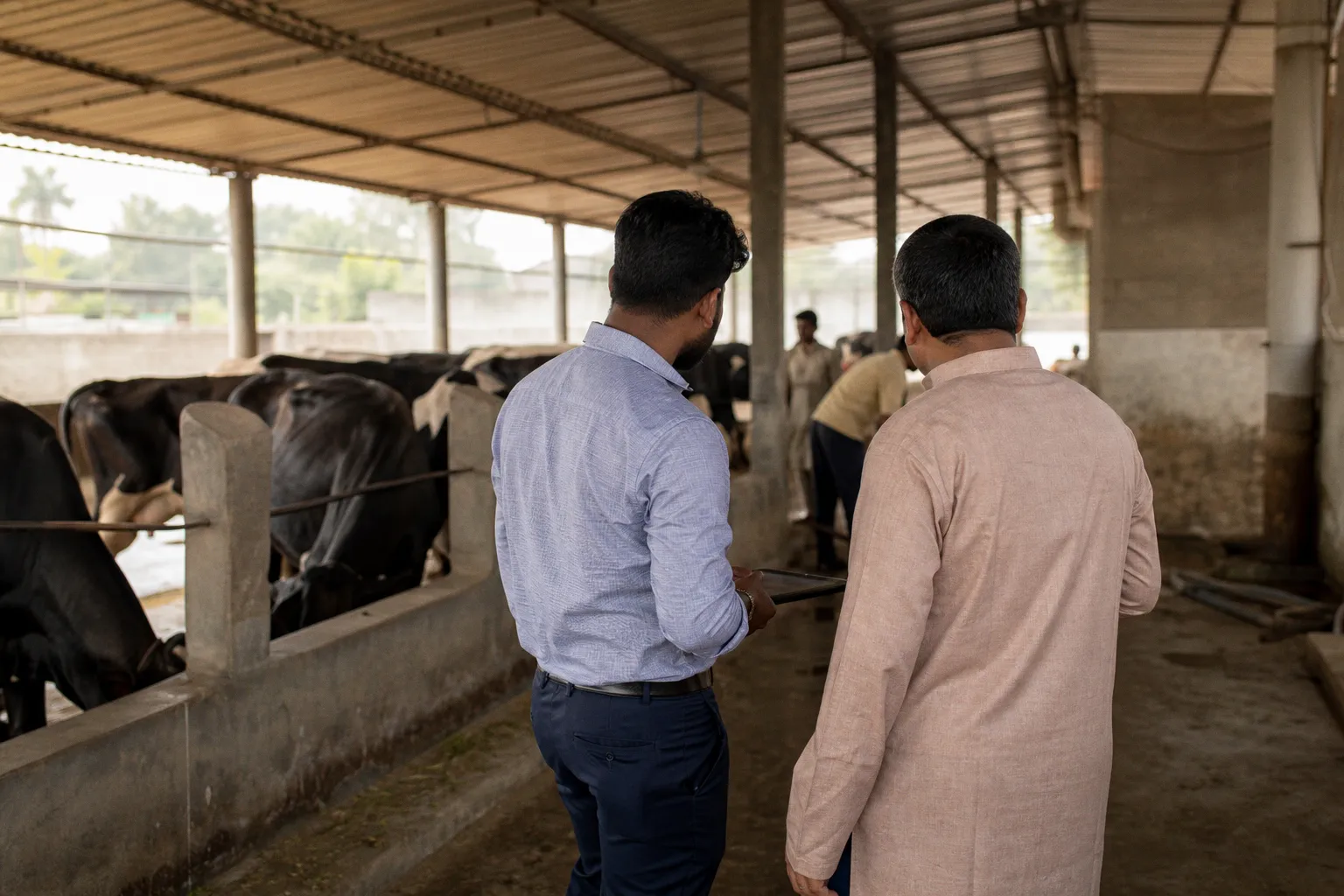
We don't yet have the full press text in hand, but the shape of this arrangement is worth tracing. City Bank sits at the center as the regulated deposit-taker and underwriter of credit. Milk Vita, with its decades-long footprint among smallholder dairy producers, supplies the customer relationships and the on-the-ground knowledge of how milk collection actually works — something no credit-scoring model can replicate from a distance. Agroshift, the digital layer, is the piece that makes the whole thing legible to a bank's risk team in Dhaka: it translates messy, analog farm economics into the kind of structured data that an automated approval engine can swallow.
For us as consumers of financial infrastructure, the interesting question isn't whether farmers will get loans. It's whether they'll get loans without taking on the cognitive load that usually comes with rural banking — the bus ride to a branch, the paper trail, the informal collateral arrangements that exclude the people who need credit most.
Why the cooperative matters
Here's the behavioral-economics angle worth paying attention to. A farmer standing in a Milk Vita collection point is already inside a high-trust environment. Adding a loan product to that same touchpoint changes the choice architecture entirely: the decision happens next to the milk churn, not across a screen at midnight. That proximity is doing real work. It lowers the friction of saying yes, yes — but it also raises a question we should ask every time a bank bundles itself into a supply chain. Who explains the repayment schedule? Who flags the compounding interest? Whose incentives are aligned with the borrower's?
When the lender, the buyer, and the data intermediary share a single relationship with the farmer, the convenience is real, and so is the potential for quiet extraction.
What we'll be watching
Three things, as this rolls out. First, whether City Bank publishes actual loan terms — interest rates, tenor, collateral requirements — or whether those details stay buried inside Milk Vita's collection workflow. Second, whether Agroshift's data feed becomes a credit-scoring moat that other lenders can plug into, or a closed loop that locks farmers into one bank's products. And third, whether repayment defaults are absorbed by the cooperative's buyer relationship, which would be a quiet form of subsidy, or pushed back onto the individual farmer.
A three-way handshake like this is easy to announce. The harder, more telling product is what happens twelve months in, when the first cohort of borrowers has lived through a full milk-production cycle and the spreadsheets either reconcile or they don't.