The CMB Mobile Banking App from China Merchants Bank Co. - quiet interface, QR payments and wealth t
A mobile banking app can be “quiet” and still do a lot of steering. According to AD HOC NEWS, China Merchants Bank’s CMB Mobile Banking App puts balances, transfers, QR payments, cards, savings and…
Jocelyn Davenport·updated June 30, 2026
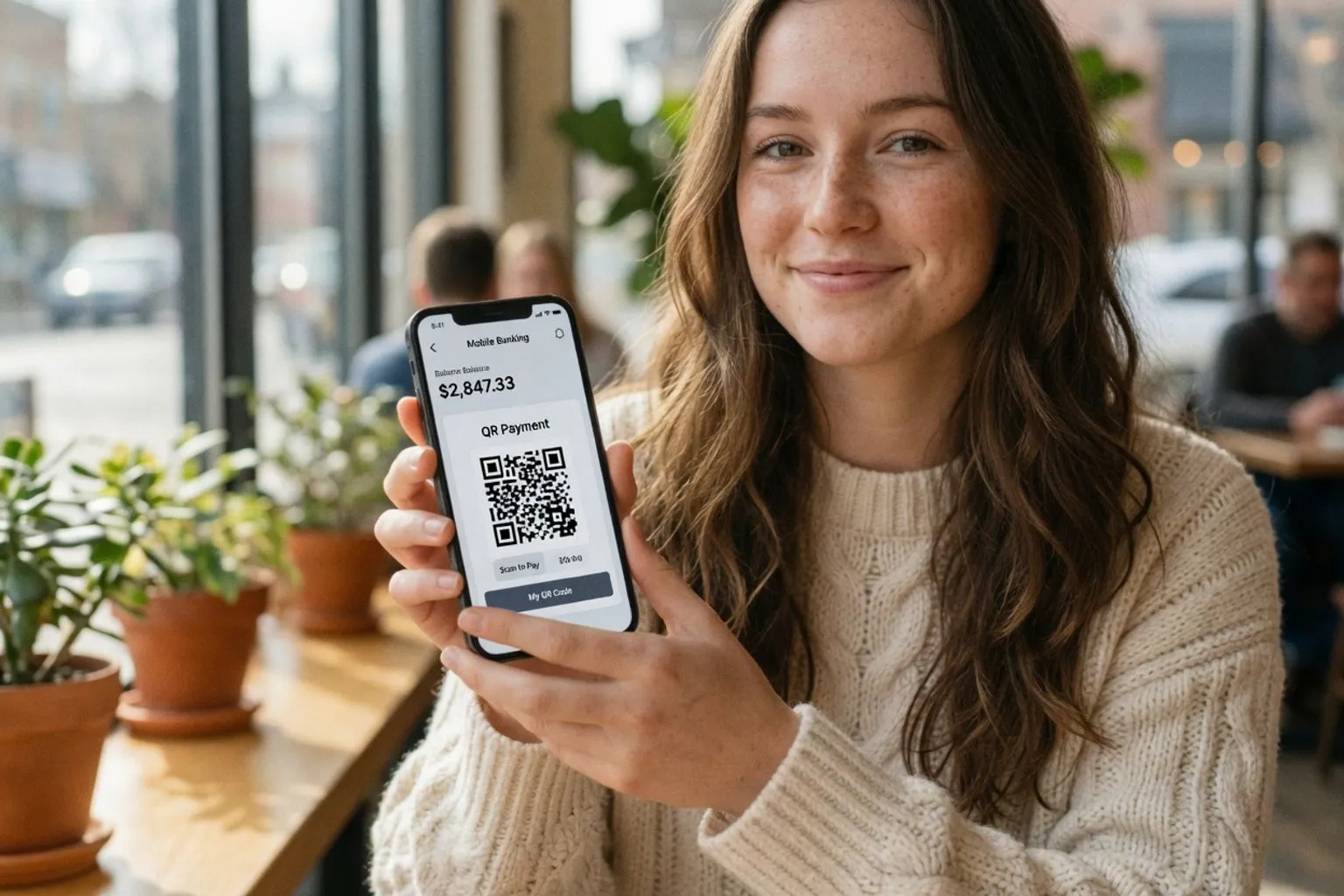
A mobile banking app can be “quiet” and still do a lot of steering. According to AD HOC NEWS, China Merchants Bank’s CMB Mobile Banking App puts balances, transfers, QR payments, cards, savings and investment products into one retail interface for mainland China customers. For anyone watching neobanks and challengers, the interesting part is not just the feature list — it is the choice architecture: what the app makes easy, what it makes slower, and where trust is being built one tap at a time.
A bank app designed around the thumb, not the branch
The CMB Mobile Banking App is described as China Merchants Bank’s central mobile channel for retail customers in mainland China, available on iOS and Android and connected directly to the bank’s core systems. That matters because this is not a sidecar wallet or a cosmetic mobile layer. It is the main route into current accounts, cards, savings and investment products.
The reported interface is deliberately plain: a clean home screen, account balances near the top, and large entry points for transfers, QR payments and card management. Users can log in with fingerprint or face recognition, reducing the need to type passwords on small screens.
This is a small UX detail with large behavioral consequences. Every extra field is cognitive load. Every hidden menu is friction. When balances, bills and payment actions are placed within easy reach, the app quietly trains users to treat the bank as an always-on operating layer for daily money, not as a place they visit only when something breaks.
For neobanks, this is familiar territory. For incumbent banks, it is harder. The promise is not “we have an app”; almost everyone does. The harder question is whether the app feels like a control panel or a maze with biometric login.
QR payments are the everyday rail
The source places the CMB app inside China’s QR-driven payment environment, where customers can scan a merchant code or show a dynamic payment code. Debit and credit cards from China Merchants Bank can reportedly be bound to the QR wallet, with per-transaction limits and instant push notifications after payment.
That combination is practical and revealing. The payment journey is not only about speed at a supermarket, metro gate or street stall. It is also about reassurance after the tap: a vibration, a notification, a visible record. The app turns the phone into a real-time alert terminal for the account.
There is a useful lesson here for challenger banks outside China. Faster payments alone do not create trust. Users also need clear limits, immediate confirmation and a way to understand what just happened. The emotional design of money movement is often underestimated: we want payments to disappear when everything is fine, and become highly visible the moment something feels off.
The app also includes ordinary banking functions: transfers between own accounts, transfers to other banks through China’s interbank payment systems, standing orders, card freezing, overseas spending limit controls and transaction histories. Recent payees can pre-fill forms, according to the report. Again, the less glamorous feature is the important one. A misplaced wallet in a taxi is not a marketing moment; it is a stress test for the entire user journey.
Wealth products inside the same calm interface
Beyond payments, AD HOC NEWS says the app opens access to China Merchants Bank’s wealth management shelf, including structured deposits, mutual funds and bank-managed wealth products aimed at mass affluent clients. Product lists reportedly show yields, risk levels and minimum subscription amounts, with fee and risk disclosures available before submitting a purchase request.
This is where the quiet interface becomes more consequential. Moving from checking a balance to comparing fixed-term wealth products is a meaningful shift in user intent. The app is no longer only helping someone pay for dinner or freeze a card; it is also hosting investment decisions without a human adviser on screen.
For users, the practical question is whether the interface slows them down at the right moments. Smooth design is excellent for bill payments. It is more delicate for structured deposits, mutual funds and bank-managed wealth products, where disclosure, risk labeling and minimum subscription amounts need to be legible rather than merely present.
The source also notes a security model involving biometric authentication, one-time passwords and device binding. New devices may need registration and confirmation by SMS or branch-based procedures. That may feel inconvenient to users expecting instant access, but this is the kind of friction that can be protective rather than lazy.
Separately, FF News has reported that Gr4vy and Plaid are partnering to enable pay-by-bank payments for global merchants, though the available snippet gives no further detail. Put next to the CMB example, the broader direction is clear enough to watch carefully: banks, fintech infrastructure firms and merchants all want the account to become a more direct payment and commerce layer.
The open question is whether that layer earns user trust. A good app is not the one that removes every pause. It is the one that knows which pauses protect us.